Back to 2025 Abstracts
Systematic Review of Psychosocial Outcomes Among Women with Breast Cancer Undergoing Mastectomy
Lauren Raymond-King
*1, Claire R. Morton
1, Jacqueline Moses
1, Arshnoor Kaur
2, Elizabeth L. Godfrey
1, Safraz A. Hamid
1, Olivia Lynch
3, Alexandria Brackett
2, Rachel A. Greenup
1, Elizabeth R. Berger
11Department of Surgery, Yale-New Haven Hospital, New Haven, CT; 2Yale University, New Haven, CT; 3Department of Surgery, Brigham and Women's Hospital, Boston, MA
Background: The diagnosis and treatment of breast cancer affects women physically, emotionally, psychologically, and socially. Body dysmorphia, sexual dysfunction, chronic pain, and poor mental health remain major challenges for women following mastectomy. The purpose of this systematic review was to evaluate the impact of mastectomy on a patient’s psychosocial outcomes.
Study Design: We performed a systematic literature search that included terms related to “mastectomy”, “patient-reported outcomes”, and “psychology” using three databases, according to Preferred Reporting Items for Systematic Reviews and Meta-Analyses (PRISMA) guidelines. Studies involving women with stage I-III breast cancer who underwent mastectomy and investigating psychosocial-specific patient-reported outcomes were included.
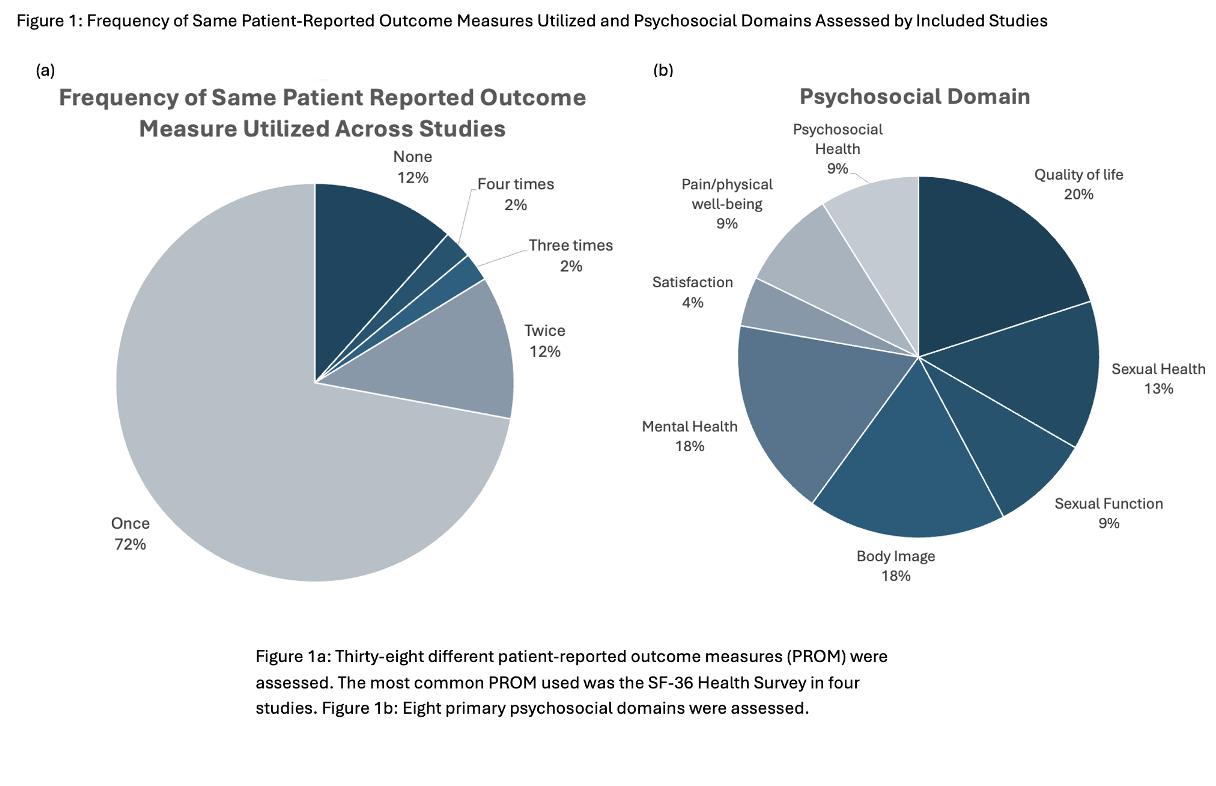
Results: 2999 abstracts were identified; 20 manuscripts met inclusion criteria. Fifteen studies used validated patient-reported outcome measures, two studies were qualitative, and three studies created their own surveys. The psychosocial domains assessed included quality of life (45%), sexual health/sexual function/body image (75%), mental health (40%), pain/physical health (20%), psychosocial well-being (20%), and patient satisfaction (10%) (Figure 1). Seventeen studies directly compared mastectomy to surgical alternatives (breast conserving surgery) or cancer-free controls and the majority found worse psychosocial outcomes among those who underwent mastectomy, particularly with regards to sexual health, sexual function, and body image.
Conclusion: Women undergoing mastectomy have poor psychosocial outcomes after surgery, including compared to patients undergoing breast conservation surgery for breast cancer. There is a need to better prepare women for the psychosocial and emotional sequalae of mastectomy. Future work will focus on development of a validated patient-reported outcome tool designed to assess the psychosocial readiness of women facing mastectomy.